The focus on last-mile orchestration is driven by a critical transition in consumer expectations. At its core, this is the centralized, automated coordination of every logistical step from the distribution hub to the customer doorstep. It aims to solve the industry’s most persistent challenge. The final leg of the journey now accounts for as much as 53% of total shipping expenses. In 2026, the competitive frontier has moved beyond the simple transport of goods to the mastery of network reliability.
With 60% of consumers prioritizing reliability over speed, synchronization is the ultimate objective. By optimizing route planning, dispatching, and tracking, brands can finally reduce costs while improving visibility. When a delivery aligns perfectly with the customer’s schedule, it strengthens the operational rhythm and builds long-term brand equity.
To transform delivery management into a high-impact growth lever, operations teams must prioritize these six strategic pillars.
1. Courier-to-Kitchen Synchronicity
This metric measures the alignment between production completion and logistics departure. It captures the exact window where an order remains in the staging phase before transit begins.
- Operational Impact: Success here ensures a frictionless staging process. When order readiness and courier arrival are perfectly aligned, you maximize Fleet Fluidity and preserve product integrity. Tightening this window keeps the operation moving and protects the bottom line.
2. Geofence Precision
Standard GPS is a liability in complex urban environments. High-performance operations require geofencing that operates at the process level to manage autonomous arrival triggers.
Before milestones can be automated, the system must establish Digital Provenance. This is the verifiable record of an asset’s origin and movement through the digital supply chain. In logistics, it ensures that data, such as a “delivered” status, is authenticated by high-fidelity location proofs and timestamping that cannot be spoofed. Digital provenance is a top strategic technology trend for 2026. This level of precision is now a baseline requirement for scaling.
- Operational Impact: Precision geofencing establishes digital provenance. This ensures milestones trigger only when a courier is at the specific service entrance. This level of accuracy automates arrival status, removing the communication burden and allowing the fleet to maintain its pace without the interruption of manual check-ins.
3. First-Attempt Success Rate
In an environment defined by evolving operational costs, the first-attempt success rate is the definitive measure of fulfillment integrity.
- Operational Impact: Success here is driven by Hyper-Local Intelligence. This is the integration of spatial data and contextual customer behavior to ensure every dispatch is influenced by this detail of precision. Prioritizing this metric maximizes the utility of your fleet and ensures resource efficiency.
4. WISMO Inquiry Rate
The industry is evolving toward a model of proactive, milestone-based transparency. Modern leaders establish trust by keeping information flow ahead of the physical delivery. Capturing operational advantage requires moving beyond reactive support.
- Operational Impact: A low inquiry rate is a hallmark of a transparent operation. By providing high-resolution visibility throughout the delivery lifecycle, you allow your support teams to focus on high-value exceptions. Controlling this flow ensures the customer remains informed and engaged at every step.
5. Fleet Utilization & Idle Time
This metric monitors On-Demand Scalability. This is the percentage of a shift where a rider is engaged in an active delivery route.
- Operational Impact: High utilization is the result of sophisticated route planning and the ability to flex resources based on real-time spikes. Achieving a balanced utility ratio ensures that every hour of fleet time is actively contributing to the revenue cycle, allowing the network to scale alongside live demand. Maximizing fleet utilization is the operational cornerstone of any delivery cost optimization playbook.
6. Dynamic ETA Accuracy
This is the ultimate barometer of predictive maturity. It compares the promised delivery window at checkout against the actual proof-of-delivery timestamp.
- Operational Impact: Excellence requires maintaining a narrow variance. Reliable, dynamic ETAs allow the entire operation to function on a predictable schedule. Consistent arrival times build a reliability premium, positioning the brand as a dependable part of the customer’s daily routine.
The New Standard of Fulfillment
The role of the delivery network is no longer a reactive execution layer. Success today depends on curating a delivery ecosystem that synchronizes staging, fleet movement, and customer data into a single, high-fidelity operation.
True efficiency requires more than just high-end software; it demands a structural shift in how we approach the entire logistics lifecycle. Embedding resilience into the foundation of business objectives is central to staying ahead of the curve when it comes to navigating the complexities of modern fulfillment. By implementing these six pillars, brands transform a back-office utility into a core promise, turning every delivery into a lasting competitive advantage.
The quick-service restaurant (QSR) industry is entering a new age, driven by data, automation, and a growing appetite for convenience that never compromises on experience. Global projections point to sustained momentum, with the sector expected to continue expanding as digital ordering, personalized engagement, and operational intelligence accelerate across global markets.
The Middle East and Africa’s fast-food market alone is expected to hit $522.6 billion by 2033, fueled by younger demographics, rapid urbanization, and digital-first consumer habits. These forces are conceiving a tech-forward ecosystem where efficiency, personalization, and sustainability converge.
These five tech trends will define how QSRs scale, innovate, and take shape in 2026.
1. AI Adoption in QSRs Is Accelerating Faster Than Ever
AI is recalibrating how QSRs think about labor, demand forecasting, inventory control, and customer experience. Industry data shows that the AI in the QSR market is positioned to expand rapidly between 2024 and 2029, highlighting how quickly brands are turning to intelligent tools that strengthen reliability and streamline decision-making.
From smarter prep-time prediction to automated order accuracy and personalized menu interactions, AI is establishing the foundation for the next generation of operational excellence. In 2026, QSRs that adopt adaptable AI-led workflows will find themselves more agile, more consistent, and better equipped to manage fluctuating demand.
2. Data-Led Operations Are Becoming Core to QSR Strategy
Restaurants are increasingly grounding their decisions in real-time operational data, enabling tighter cost control and stronger demand planning. This shift mirrors broader patterns seen across the global QSR sector, where digital and mobile-first behaviors continue to influence growth trajectories.
Data is no longer a supplementary asset, it’s the backbone of scalable QSR models. Predictive analytics, customer intelligence, and digital sales insights are helping brands refine everything from menu performance to delivery routing.
As decision cycles get shorter and consumer expectations rise, data-led clarity will be one of the most valuable competitive advantages.
3. Automation Is Reinforcing Speed and Consistency
The real impact is measured not just in speed, but in how these systems improve accuracy and support teams.
Automation is evolving into a central pillar for QSRs aiming to scale efficiently. Whether through self-ordering kiosks, kitchen display systems, automated prep flows, or delivery synchronization, operators are using automation to tighten execution and reduce operational friction.
By automating repetitive or timing-sensitive tasks, staff can focus on areas that demand adaptability and customer-facing engagement.
As automation expands, many QSRs are also reassessing inventory logic. Structured approaches like FIFO continue to gain relevance for brands working with high turnover and tight freshness requirements.
This foundation allows operators to maintain consistency even as order volumes increase.
4. Hyper-Personalization Will Define Customer Loyalty
Consumers now expect digital experiences that feel intuitive, relevant, and context-aware. Personalization is evolving into a multi-layered strategy—encompassing menu customization, behavior-based recommendations, and deeper loyalty engagement.
Digital customers are interacting with brands more frequently and across more touchpoints. Research shows that brands prioritizing digital channels, customer data, and mobile-driven experiences experience significantly stronger revenue growth across the QSR category.
As QSRs refine their ecosystems, personalization will feel less like a value-add and more like an expectation.
5. Delivery Networks Are Evolving Into Connected Ecosystems
Delivery remains one of the strongest growth engines in the QSR sector. But the focus in 2026 is shifting from pure speed to transparency, precision, and aligned cost structures.
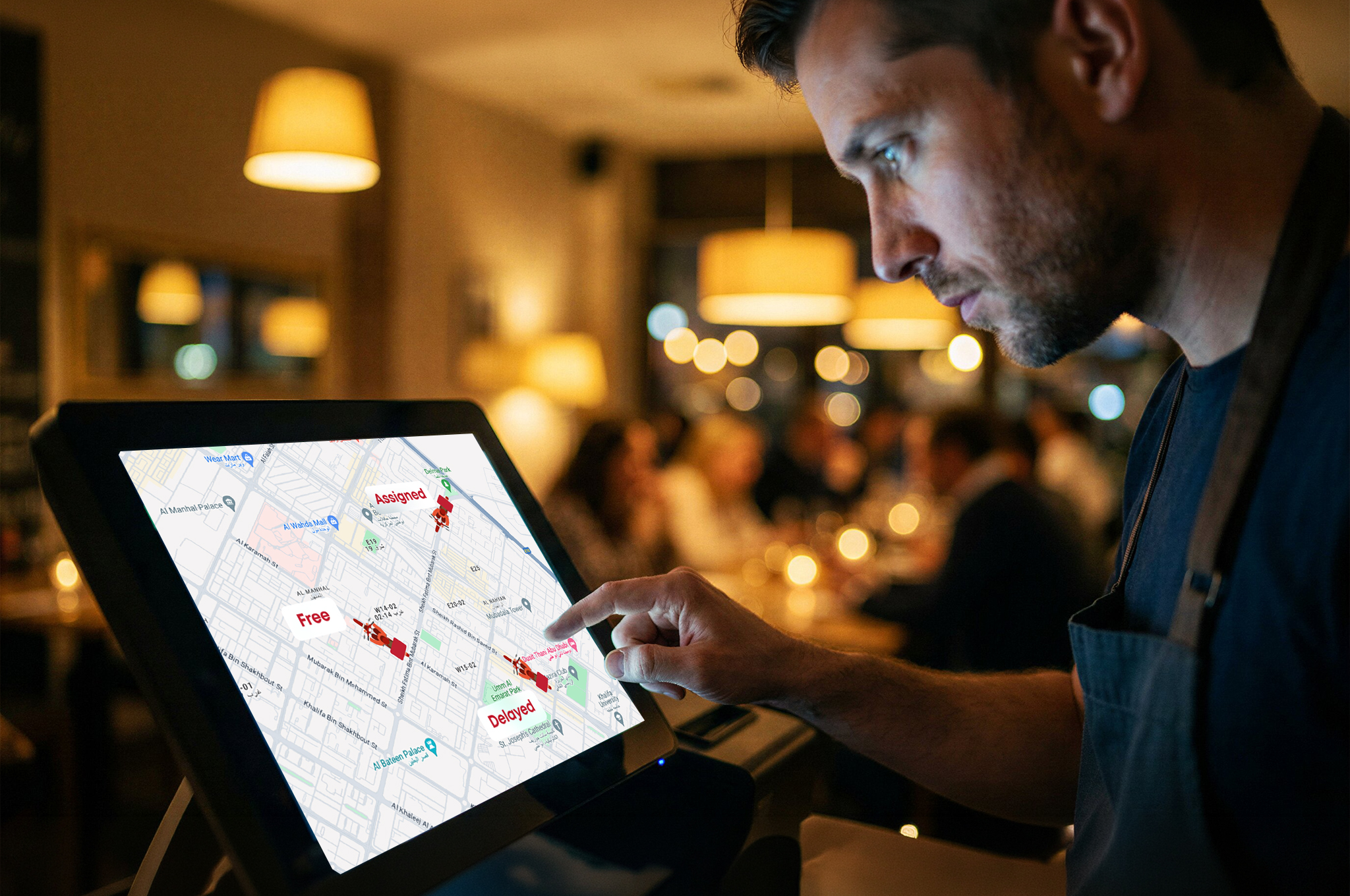
Brands are adopting advanced delivery management platforms, real-time GPS tracking, dynamic ETAs, and integrated courier workflows to improve order reliability. Mature delivery ecosystems not only reduce operational strain but they strengthen customer confidence and loyalty.
As competition increases, many QSR chains are reliant on targeted digital and operational enhancements to facilitate revenue growth.
This evolution positions delivery as a sustainable, scalable channel rather than an auxiliary one.
Where QSRs Are Headed In 2026 And Beyond
As 2026 , QSRs are building strategies anchored in intelligence, agility, and customer-centric innovation. The combination of AI, automation, data, personalization, and connected delivery ecosystems will shape how restaurants operate for the next decade.
AI, automation, personalization, and omnichannel ordering are practical levers that directly influence revenue, repeat business, and operational resilience.
Technology is helping brands move with more intention, grounded in data rather than instinct. And as these capabilities grow, the QSRs that thrive will be the ones using tech to operate with clarity and consistency at scale.
Lyve continues to support restaurants with tech-enabled logistics and delivery infrastructure designed for reliability, smarter decision-making, and seamless last-mile execution, helping QSRs grow with confidence in a rapidly changing market. Brands willing to embrace advanced tools and resilient operational models will set the tone for a QSR landscape that is ready for the future.